Monday, October 28, 2013

"Medusa"

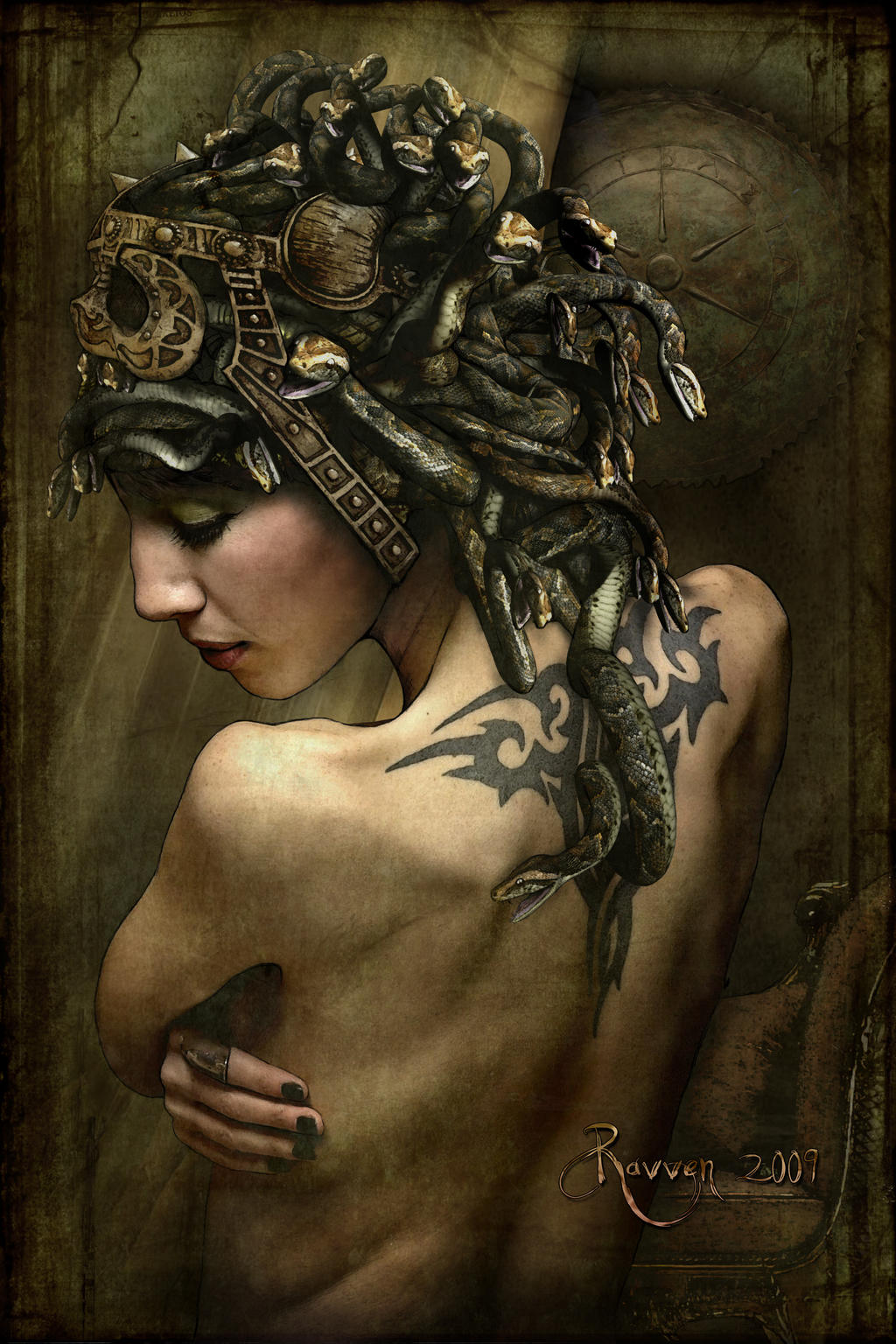
Looking at Plath's Ariel Poems, one particular one stood out to me because of its links to Greek Mythology, "Medusa."

The history of Medusa is a long and intricate one. Basically, she was a beautiful mortal, daughter of Phorkys and Keto (the children of Gaia and Okeanos). Her and her two sisters are known as the Gorgons--but she was the only mortal of the three. While in her youth, Poseidon (the god of the sea) was so taken by her beauty, that he raped her in the temple of Athena. When Athena found out about this, she was so outraged that she cursed Medusa--turning her hair to snakes and making it so anyone who looked into her eyes would turn to stone.

Off that landspit of stony mouth-plugs,
Eyes rolled by white sticks,
Ears cupping the sea's incoherences,
You house your unnerving head -- God-ball,
Lens of mercies (lines 1-5).
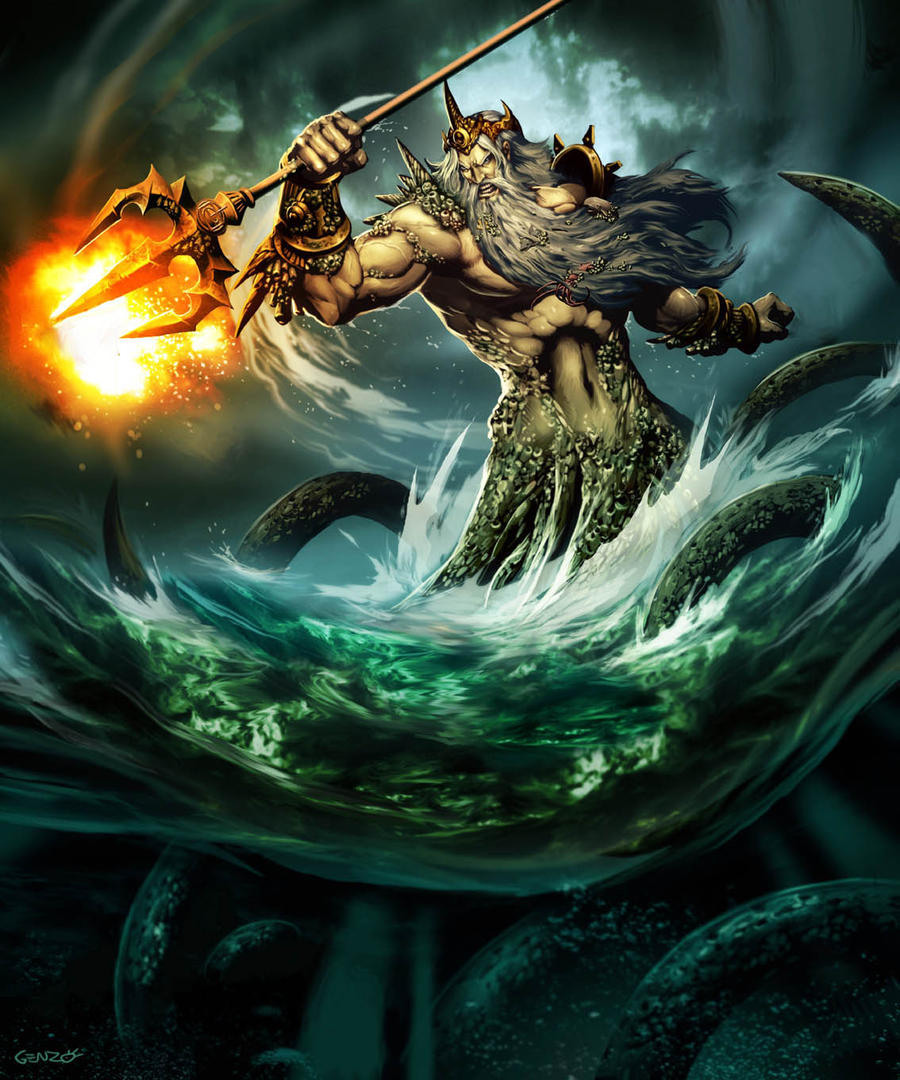
These lines link easily back to the story of Medusa, as it speaks of "eyes" and the term "stony," meaning that when someone looks into her eyes, they will turn to stone. In the last few lines, however, it switches to the "sea's incoherences" as Poseidon didn't truly know what he was getting into when he decided to make love to Medusa within Athena's temple--he didn't realize what the consequences of his actions would hold for her. "You house your unnerving head" explains that Medusa's prior beauty was
something she was incredibly proud of. This shows a woman's pride in her beauty, and that since her curse, Medusa wants to hide her head away from the world so no one will see what she has become.

Moving deeper into the poem, we realize that reading through Poseidon's point of view holds an especially brilliant way to view the story of Medusa. While many individuals may want to focus on how Medusa feels about her transformation, or that she holds a special lens within the world of feminism because many girls--when asked to describe a face of horror or anger--bring up the picture of Medusa. However, through Poseidon's view, we can see how his part in her life influenced her.

Did I escape, I wonder?  ...
In any case, you are always there,
Tremulous breath at the end of my line ...
To my water rod, dazzling and grateful, 
Touching and sucking. ...
I didn't call you.
I didn't call you at all.
Nevertheless, nevertheless
You steamed to me over the sea,
Fat and red, a placenta (lines 12, 16-17, 19-25).

Reading from Poseidon's point of view, we see how he feels as though Medusa's reach is always there with him, "at the end of [his] line," even though he "didn't call [her]." Though the way he speaks of her seems as though he still views her as the woman she was when he made love to her--"You are always there...dazzling and grateful."

Another part of Medusa's mythology is that when Perseus cut off her head, the blood dropped into the ocean and produced two children: Pegasus and Chrysaor. Within these stanzas, we begin to see this image. "You steamed to me over the sea, fat and red, a placenta." So while placentas are usually
reserved for actual vaginal births, Medusa's birth of her children seems to move the idea of a placenta onto the ocean, since that's where the myth states her children were truly born from.

Finally, we can look at the last two stanzas in order to see how Poseidon's view shifts.

Green as eunuchs, your wishes
Hiss at my sins.
Off, off, eely tentacle!

There is nothing between us (lines 38-41). 

While he previously thought of Medusa as the woman she used to be, here we begin to see a type of resentment toward the woman she has become. While her body changed, Medusa's mindset has always undoubtedly changed considering that she now realizes that it was because of Poseidon's "sins" that her hair turned to snakes and her eyes turn others to stone. This is what motivates Poseidon to finally admit the last line of the poem, "there is nothing between us." Much mythology seems to state about lovers, Medusa was just one of eighty-one different lovers that Poseidon went to bed with and produced children with. Therefore, when we look into the grand scheme of things, Poseidon finally realizes that there is nothing incredibly special between him and Medusa--just fleeting lust.

Sunday, October 27, 2013

"The Bell Jar" Through Literary Lenses

When it comes to literary lenses within The Bell Jar, there are three which can easily be applied: The Mirror, The Microscope, and The Telescope.

First, The Mirror is applied by finding a reflection of yourself in the text. For me, this could apply to a variety of sections for Plath's "The Bell Jar," but for the purposes of this post, I'm going to narrow it down to just a couple passages.
"After Doreen left, I wondered why I couldn't go the whole way doing what I should any more. This made me sad and tired. Then I wondered why I couldn't go the whole way doing what I shouldn't, the way Doreen did, and this made me even sadder and more tired" (Plath 30). 
Esther Greenwood is the type of character I can relate with easily. There's something about obligations and the way they drain her that can be reflected easily within my life. Along with juggling school, and I'm a part of the EMU Forensics Team (speech and dramatic interpretation), which takes up a lot of my time. Between these two things, plus trying to keep some resemblance of a social life--and alone time--my life has become extremely hectic. At times, I stop and wonder the age-old question: WHY. Why am I constantly pushing myself to do these things when it would be so much easier to take some time off and get my life in order. Why am I not pushing myself to do more?

These two forces pulling me in opposite directions mirrors Esther's pull within "The Bell Jar." The pull between doing what's expected of her--and completely going against it--has left her in the middle, where she's not sure what to do anymore. I think this kind of struggle has touched, or will touch, every person's life at some point. Two conflicting thoughts or worlds at war is a very common metaphor, and is heavily prevalent within the world of "coming of age" novels.

Second, The Microscope is used by narrowing in on particular passages and breaking them apart in the context of the entire work. This is the most nit-picky lens, as it means completely dissecting a particular paragraph or section of the text.
"I made a decision about Doreen that night. I decided I would watch her and listen to what she said, but deep down I would have nothing at all to do with her. Deep down, I would be loyal to Betsy and her innocent friends. It was Betsy I resembled at heart" (Plath 22).
This paragraph, found in the second chapter of the novel, marks a turning point in Esther's mindset. Earlier in the novel, she felt a connection to Doreen because she wanted to be like her--she wanted to have fun "like everybody else." Connecting herself to Doreen was a way for Esther to feel as though she belonged within the world she's currently in. However, once Doreen went out with Lenny Shepherd and came home extremely wasted, Esther was able to realize that the individual she had put her money in, so to speak, wasn't the person she thought she was.

The phrase "I would have nothing at all to do with her" states it best. Esther's decision to cut herself off emotionally from Doreen, yet still associate with her, fuels many of her decisions and actions throughout the novel. Also, the repetition of the phrases such as "deep down" and "at heart" speak to Esther's yearning to be a good person "deep down" or "at heart." The way she determines whether she is a good person or not leans on the idea of who she associates with, or "resemble[s] at heart." She decides that she wants to be loyal to "Betsy and her innocent friends" because she feels that being around this innocence will help her resemble "Betsy...at heart."

Third, The Telescope is used when one looks at the text in the wider perspective of the author, history, world history, humanity, etc.
"I raised my eyes then, and saw Doreen's head silhouetted against the paling window, her blonde hair lit at the tips from behind like a halo of gold. Her face was in shadow, so I couldn't make out her expression, but I felt a sort of expert tenderness flowing from the ends of her fingers. She might have been Betsy or my mother or a fern-scented nurse" (Plath 47). 
 Although this is a small segment of the text--explaining how Esther sees Doreen while she's sick with food poisoning--it speaks volumes in a broader context. For one, we can look at this in terms of Plath's life in the 50's and feminism. Plath grew up in a time where women were seen as motherly, soft, comforting, and tender. This is easily reflected within this passage because Esther sees Doreen as a sort of angel ("...like a halo of gold...") come from above to nurse her back to health.

All of the adjectives used to describe Doreen within this passage are soft, much like how women were seen within the 1950's. Tenderness, mother, nurse, silhouetted, halo of gold... Each of these terms reflects the idea of femininity that Plath hoped she embodied during her time. Sure, she wanted to be a writer and to have time to herself, but Plath also hoped to be a feminine motherly figure. In this passage, Plath writes Doreen to be the woman she herself wishes to be--a figure of femininity who has "expert tenderness flowing from the ends of her fingers."


How do you view Plath's "The Bell Jar" within the context of these three literary lenses? Thoughts and comments welcome!!

Tuesday, October 1, 2013

The Disquieting Muses

One of my favorite poems by Plath is "The Disquieting Muses." I think what really draws me to it is how it maps out the relationship she had with her mother and draws the reader in with such vivid imagery--as well as actual memories of her childhood.

Mother, mother, what illbred aunt
Or what disfigured and unsightly
Cousin did you so unwisely keep
Unasked to my christening, that she
Sent these ladies in her stead
With heads like darning-eggs to nod
And nod and nod at the food and head
And at the left side of my crib?

Mother, who made to order stories
of Mixie Blackshort the heroic bear,
Mother, whose witches always, always
Got baked into gingerbread, I wonder
Whether you saw them, whether you said
Words to rid me of those three ladies
Nodding by night around my bed,
Mouthless, eyeless, with stitched bald head.

In the hurricane, when father's twelve
Study windows bellied in
Like bubbles about to break, you fed
My brother and me cookies and Ovaltine
And helped the two of us to choir:
"Thor is angry: boom boom boom!
Thor is angry: we don't care!"
But those ladies broke the panes.

The beginning of the poem is just beautiful. The imagery of her childhood that it sets up is magnificent because it gives readers a true insight into Plath's upbringing. Not only that, but Mixie Blackshort is actually from a group of short stories that her mother published, which she told that Plath and her brother when they were kids. 

But the greatest part of this, is the repetitive idea of her mother trying to protect her, trying to shield her from the evil of the world. From the ladies nodding at the side of her crib, to baking the witches always into gingerbread, and giving them Ovaltine and having them sing songs about Thor during a storm, it shows Plath's mother as a mom who just wants to shield her children from the "bad" in our world.

And the "bad" in this poem is represented by the three Fates. The picture to the left might be a silly example (it's the three Fates from the Disney movie "Hercules"), but the concept is still the same. These are the three ladies who decide who to kill by cutting a person's "life string." Those three ladies nodding by night around my bed. Mouthless, eyeless, with stitched bald head. Not only does this description show them as horrifying and sinister, but it shows how the "bad" in our world, like death, is always "looming by night around [our] bed[s]."


When on tiptoe the schoolgirls danced,
Blinking flashlights like fireflies
And singing the glowworm song, I could
Not lift a foot in the twinkle-dress
But, heavy-footed, stood aside
In the shadow cast by my dismal-headed
Godmothers, and you cried and cried:
And the shadow stretched, the lights went out.

Mother, you sent me to piano lessons 
And praised my arabesques and trills
Although each teacher found my touch
Oddly wooden in spite of scales
And the hours of practicing, my ear
Tone-deaf and yes, unteachable.
I learned, I learned, I learned elsewhere,
From muses unhired by you, dear mother.

This set of stanzas continues the idea of a mother wanting to shield her daughter from the pain and evil of the world, but it switches it to a more dismal tone--showing how, even though she's trying, she can't shield Plath from everything of the world. Plath is held down by the darkness of the world (as it shows in her writing) with how she could not lift a foot ... heavy-footed. And that even though her mother tried to teach her, she found education elsewhere, from muses unhired by her mother--the Fates and the "evils" of the world that her mom tried to shield her from. 

I woke one day to see you, mother,
Floating above me in bluest air
On a green balloon bright with a million
Flowers and bluebirds that never were
Never, never, found anywhere.
But the little planet bobbed away
Like a soap-bubble as you called: Come here!
And I faced my traveling companions.

Day now, night now, at head, side, feet,
They stand their vigil in gowns of stone,
Faces blank as the day I was born,
Their shadows long in the setting sun
That never brightens or goes down.
And this is the kingdom you bore me to,
Mother, mother. But no frown of mine
Will betray the company I keep.

Adding an even more sad tone to the piece, these last two stanzas show how her mother came to her with a last-stitch attempt to get her to stay on the "good" side of things, with bluest air on a  green balloon bright," but Plath explains how these things "never were. Never, never, found anywhere." This, in turn, leads to how when her mother finally asked her to "Come here!", over to the world of happiness and fairytales that she wanted to believe, it forced her to own up to her traveling companions, the Fates and the "other-side" of life, the darker side. 

Now, she explains, the Fates stand their vigil at all times a day, around every part of her. This is where we realize that Plath has accepted that her life and muses are darker than most--especially of what her mother wanted of her--but that she has come to accept it as her path, and them as the company she keeps

The Colossus

Perhaps one of Plath's most interesting poems, "The Colossus" offers a very unique view on both Plath and her poetry.

A giant statue with a mysterious past, which has thus far been knocked down somehow, is the historical background to this particular poem. Anyone interested in finding out more background information about the Colossus of Rhodes should head over to the The Museum of Unnatural History's website, where there is a plethora of details on the subject.

As it pertains to Plath's poem, the connection between the two is made from the very first stanza.

I shall never get you put together entirely,
Pierced, glued, and properly jointed.
Mule-bray, pig-grunt and bawdy cackles
Proceed from your great lips.
It's worse than a barnyard.

When I first read this poem, I didn't know the history behind the Colossus of Rhodes, and took this section at face-value. It reminded me a great deal of Frankenstein's monster and how Frankenstein had to piece this "monster" together from various parts of dead bodies. So, even though he has all the seemingly correct parts, he will never be put together entirely, nor will he be properly jointed. This imagery worked incredibly well with the idea of barnyard animal sounds emitting from his lips, because multiple animals are seen in a barnyard, not just one type of animal. 

However, knowing the history of the Colossus allows an easy interpretation of trying to begin the impossible task of piecing the broken statue back together. This is continued in the next two stanzas:

Perhaps you consider yourself an oracle,
Mouthpiece of the dead, or of some god or other.
Thirty years now I have labored
To dredge the silt from your throat.
I am none the wiser.

Scaling little ladders with gluepots and pails of Lysol
I crawl like an ant in mourning
Over the weedy acres of your brow
To mend the immense skull-plates and clear
The bald, white tumuli of your eyes.

The really interesting part of these stanzas, is that not only does she continue this imagery of putting the statue back together, but she weaved in an idea of how she's fighting a near impossible battle, but she continues nonetheless. 

Although there are many interpretations of such an immense poem, I think one that really struck me was the writer-ly and domestic relationship between Plath and Hughes. By remembering their past, of how Hughes was more "highly regarded" as "The Writer" and, since he was male, he was almost the gate-keeper for writing in their partnership. Therefore, the first line perhaps you consider yourself an oracle, leads back to their relationship of how Hughes was seen as the dominate individual in their relationship. However, it goes on to explain that she is laboring, "To dredge the silt from your throat" which speaks to the idea of taking away the small pieces in order to give him a way to speak. So, even though it's a hard-going process, she is putting his needs above her own and helping him to speak.

In the third stanza, images of Lysol bring up the domestic lifestyle of the 1950's. The entire stanza shows how she's working to clean and put together something bigger than herself, even though it's a slow-going process like an ant in mourning

A blue sky out of the Oresteia
Arches above us. O father, all by yourself
You are pithy and historical as the Roman Forum.
I open my lunch on a hill of black cypress.
Your fluted bones and acanthine hair are littered

In their old anarchy to the horizon-line.
It would take more than a lightning-stroke
To create such a ruin.
Nights, I squat in the cornucopia
Of your left ear, out of the wind.

Counting the red stars and those of plum-color.
The sun rises under the pillar of your tongue.
My hours are married to shadow.
No longer do I listen for the scape of a keel
On the blank stones of the landing.

These last three stanzas of her poem bring out a myriad of ideas. First, Oresteia is a Greek trilogy, during which the father-right is put over the mother-right; the woman/mother became the passive figure. This could obviously speak to the idea that Hughes was put over Plath, and she was forced to become that passive figure in their relationship. In this same stanza, the Roman Forum is an outdoor pity and historical as the Roman Forum, meaning that she believes he has gained his role by the fact that people believe him to be of good and charismatic character.
stadium where individuals were allowed to air their grievances with their voices. Ethos/Pathos/Logos were values, but it was mostly about the quality of the message and the person's individual character. In this poem, she is accusing him of being

In this same stanza, Plath says that she opens her lunch on a hill of black cypress, and cypress is one of the symbols of the Greek goddess, Artemis. Artemis is the goddess of the hunt, wilderness, wild animals, childbirth, and virginity. The important idea here is that she is one of the only Greek gods who never married. She was, therefore, never tied down by marriage or patriarchy. This shows Plath's cry to be an individual, even within her marriage.

In the next stanza--the second to last one--It would take more than a lightning-stroke to create such a ruin explains the idea of it taking more than the power of a god (Zeus) to create such a wreckage. If we continue delving into this idea, many individuals believe that only men (the human race) can create destruction and horrible as the Colossus's fall. In turn, this shows how all wreckage rests fully on the shoulders of humanity, and therefore the stigma and stereotypes forced on Plath and her husband (mainly within the world of writing) is due to society, not any "higher power." 
Finally, we finish the poem with the statement On the blank stones of the landing which, for me, led back to the idea of John Locke's "Tabula Rasa." Within psychology and child-rearing, Locke believed that everyone is born a Blank Slate (Tabula Rasa) that society and our interactions "write" on. Therefore, when Plath states on the blank stones of the landing, she is saying that--regardless of society's norms and stereotypes--she is working her best to become a blank slate... And she wants to write herself and Hughes a new story. 

Comments welcome! :)